
Plant of the Month: Hydrangea Annabelle
The undisputed royalty of the mid-to-late summer garden, Hydrangea Annabelle is in the spotlight this month.
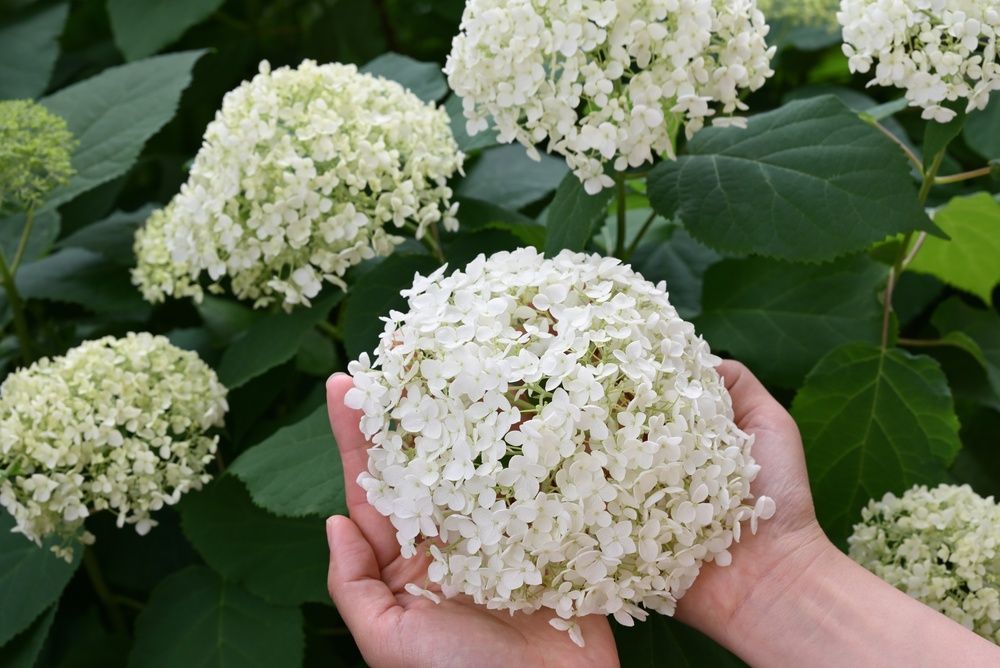
Originating from the southeastern United States as a naturally occurring cultivar of the smooth hydrangea (hydrangea arborescens), Annabelle is the undisputed royalty of the mid-to-late summer garden. Highly revered as a reliable, cold-hardy deciduous shrub, the appearance of its stunning, massive flower heads marks the glorious transition from the heat of summer into early autumn.
With broad, serrated, bright green foliage that creates a dense, handsome backdrop, Annabelle bursts into a spectacular display of symmetrical, globe-shaped flower clusters that can reach up to 30cm in diameter.
Its opulent, pillowy nature and robust blooming habit make it a magnificent addition to any garden, acting as a magnet for pollinators and a favourite for dramatic floral arrangements.
Key Features:
- Flower Colour: Dynamic and shifting; flowers open in early summer as a soft, lime green, mature into a striking, crisp white for the peak of summer, and gradually fade to a vintage pale green or tan as autumn approaches
- Size: Substantial and bushy, typically growing to 1–1.5m tall and wide, forming a beautifully rounded, symmetrical shrub.
- Hardiness: Fully hardy; unlike mophead hydrangeas, Annabelle is exceptionally resilient to severe frost because it flowers on new growth produced in the current season.
- Sunlight: Prefers partial shade to full sun. In hotter climates, shading from the harsh afternoon sun is essential to prevent the large leaves from wilting and to keep the delicate petals looking fresh.
- Soil: Thrives in moist, fertile, organic-rich, and well-drained soil. Unlike some hydrangeas, its flower colour remains white regardless of soil pH, but it detests sitting in waterlogged ground or completely drying out.
- Maintenance: Medium maintenance. Because the flower heads are so massive, the slender stems often need staking or structural support to prevent them from flopping after heavy summer rain.
Uses:
- Borders: Perfect for the back of mixed borders, cottage gardens, or woodland edges, where their expansive white blooms create an undeniable focal point against darker foliage.
- Cut Flowers: Highly prized for both fresh and dried floral arrangements; their massive, pillowy heads add instant elegance to a room, and they dry beautifully to preserve their structure for winter displays.
- Specimen Planting: Excellent when planted as standalone features, grouped in shady corners, or planted in rows to create a temporary, lush low hedge that bursts into a wall of white during the summer months.
Planting and Care:
- Planting: Best planted in autumn or early spring when the soil is moist and temperatures are cool. Dig a hole twice the width of the root ball, enrich the soil with compost, and ensure the crown sits level with the surrounding ground.
- Watering: Water regularly and deeply during the first few growing seasons to establish a robust root system. Annabelle has a relatively high water requirement; it appreciates consistent moisture, especially during dry summer spells when the heavy blooms are developing.
- Fertilising: Benefits from a scattering of balanced, slow-release fertiliser or a top-dressing of well-rotted compost applied in early spring just as new growth emerges. Avoid excessive high-nitrogen feeds, which can lead to weak, floppy stems.
- Pruning: Prune hard in late winter or early spring (February to March) by cutting the stems back to 15–30cm above the ground. Because Annabelle buds form on new wood, this annual hard pruning encourages vigorous new growth and spectacularly large flower heads.
Did you know?
Hydrangea Annabelle is a sterile cultivar, meaning those massive flower globes are made entirely of showy sepals designed to look pretty rather than produce seeds! This is why the blooms stay attractive for months on end. The plant was famously discovered in the wild near Anna, Illinois, in 1910 by Harriet Kirkpatrick, who noticed its breathtaking presence in the woods and transplanted it to her garden, where it eventually took the horticultural world by storm.