
Paving the Way
Whether you’re looking for a sleek urban terrace or a rustic country retreat, here is our guide to the paving materials defining modern landscapes this year.
As garden design experts, we often tell clients that choosing the right paving creates the bones of your garden. Plants will grow, seasons will shift, and furniture will be replaced - but your path or patio stone is a permanent investment.
In 2026, trends have shifted away from "just a patio" and more towards creating outdoor living areas. Whether you’re looking for a sleek urban terrace or a rustic country retreat, here is our guide to the paving materials defining modern landscapes this year.
Porcelain Paving: Modern
Porcelain has taken the design world by storm, and for good reason. It’s a vitrified material, meaning it’s fired at incredibly high temperatures to create a slab that is almost entirely non-porous.
- The Look: Extremely consistent. It’s perfect for that indoor-outdoor flow where the tile in your kitchen perfectly matches the patio outside.
- The Pros: It’s virtually maintenance-free. It won't grow moss or algae, it’s frost-proof, and it’s resistant to fading.
- Expert Tip: In 2026, we are seeing a move toward oversized formats (900x600mm or even 1200x600mm). Larger slabs mean fewer grout lines, making small gardens feel significantly bigger.
Natural Sandstone: Timeless
If you want a garden that feels like it has been there for decades, natural stone is unbeatable. Indian Sandstone remains the ‘old reliable’ of garden design, beloved for its organic texture.
- The Look: Every slab is unique. You’ll see fossil imprints, copper veining, and riven surfaces that catch the evening light beautifully.
- The Pros: Naturally slip-resistant if it’s kept clean and generally more budget-friendly than high-end porcelain.
- Expert Tip: This year, warm tones are back. While grey hues dominated the early 2020s, we are now seeing a resurgence in buff, honey, and desert tones to create a Mediterranean, sun-drenched feel.
Limestone: Sophisticated
Limestone is often a garden designer’s best-kept secret. It offers a flatter, smoother finish than sandstone but retains the authentic veining that porcelain lacks.
- The Look: Subtle and elegant, it often comes in honed finishes that feel velvety underfoot.
- The Maintenance: Limestone is more sensitive than other stones; darker colours can be prone to fading if not sealed correctly.
Expert Tip: Use a mixed size and lay it in a coursed, lineal bond to give a modern look to a traditional material.
Slate: Dramatic
Striking and versatile, slate is the go-to choice for those seeking a bold, high-contrast landscape. It provides a unique, layered texture that offers a natural "split" face, giving it more grip and character than smoother stones.
- The Look: Contemporary. Slate is known for its rich, deep tones ranging from charcoal and midnight black to rustic copper and blue-grey. Its naturally riven surface adds depth and a rugged, organic feel.
- The Maintenance: Highly durable and naturally water-resistant; however, slate can be prone to spalling (thin layers flaking off) in its first year as it settles.
Expert Tip: Choose Brazilian Black slate for a consistent, minimalist finish, and pair it with light-coloured grout to make the sharp edges of the stone pop.
Granite: Tough
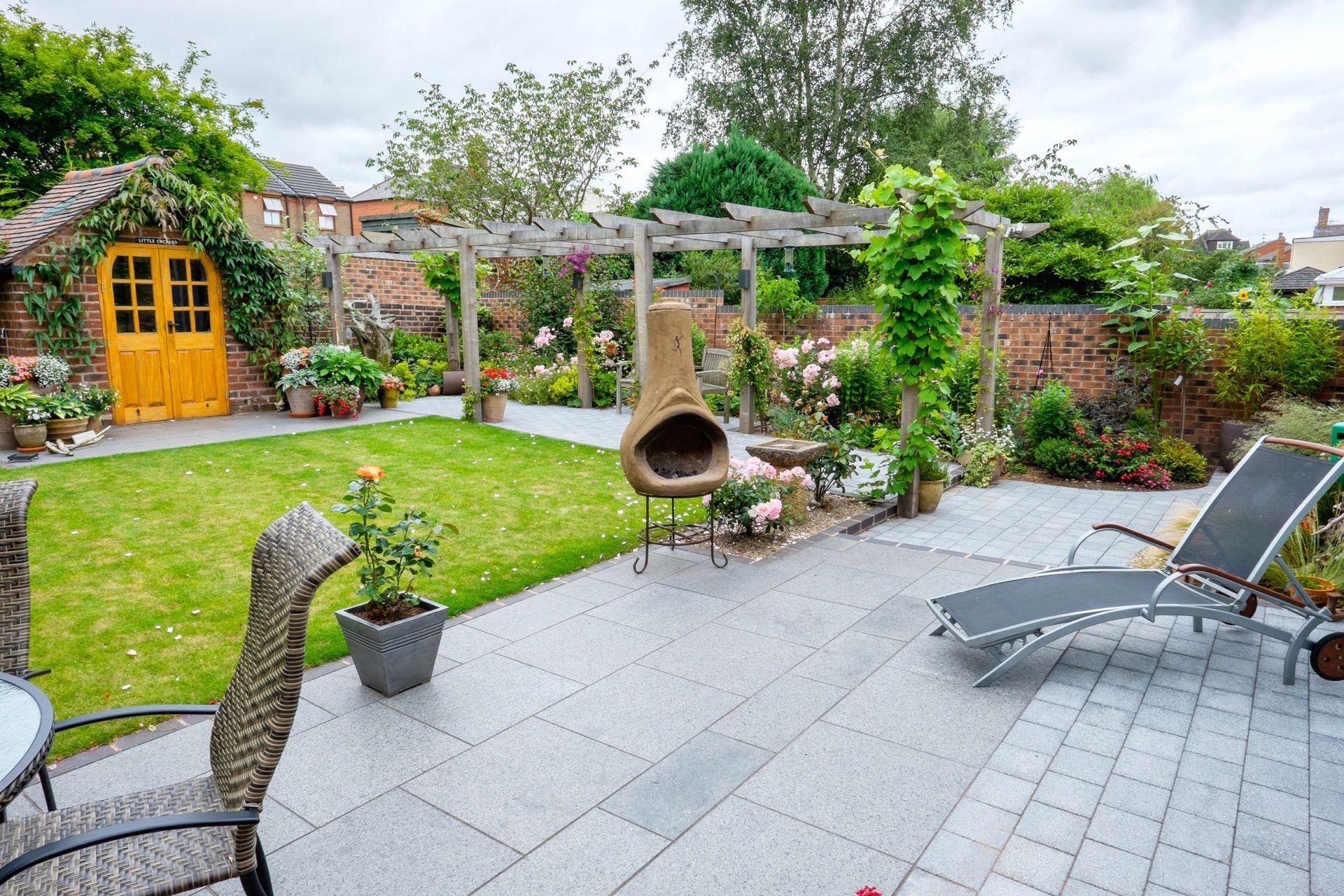
Granite is the ultimate choice for durability and precision. It is an igneous rock formed from volcanic activity, making it one of the hardest paving materials available and ideal for high-traffic areas like driveways or busy entertaining spaces.
- The Look: Consistently speckled and modern, granite offers a uniform aesthetic with a slight sparkle due to its quartz content. It is typically sawn on all six sides for perfectly straight lines and a clean, architectural finish.
- The Maintenance: Exceptionally low maintenance; its density makes it highly resistant to scratches, rain, and frost. It is also naturally slip-resistant when textured.
Expert Tip: Use large-format silver-grey granite planks to elongate a small patio and create a sleek, high-end feel that mimics interior flooring.
Sustainable & Permeable Solutions
With the climate shifts we’re seeing in 2026, managing water runoff is no longer just an additional - it’s a design necessity.
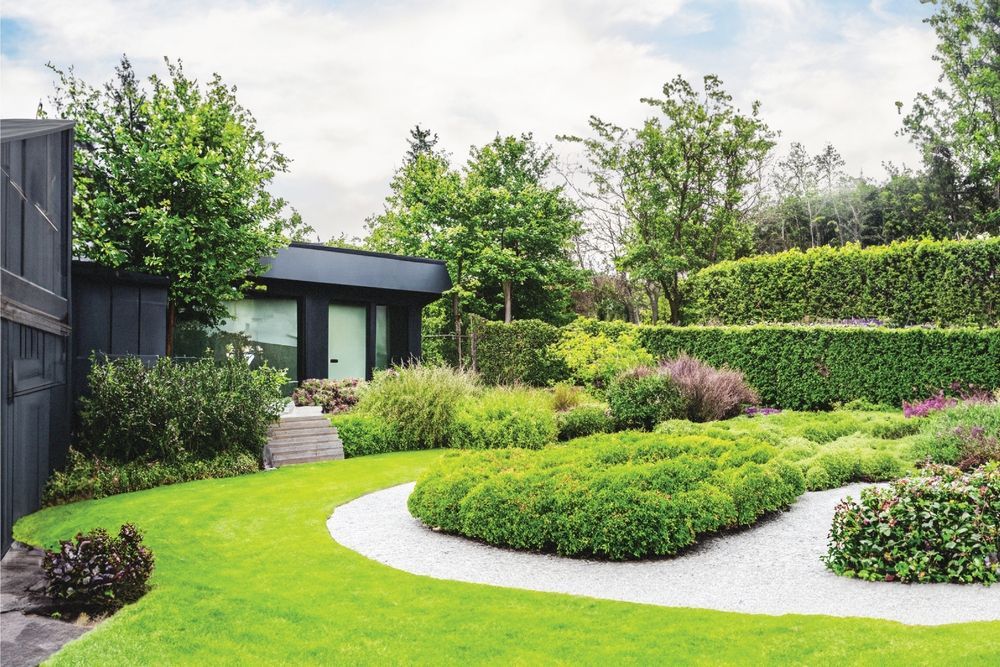
- Gravel & Resin-Bound: Excellent for drainage. Resin-bound paving gives you the look of gravel but stays secured in place, making it wheelchair friendly.
- Self-Bound Gravel: A very traditional alternative that packs down to a very hard surface – it’s permeable, non-slip and also wheelchair friendly.
- Reclaimed Stone: For the ultimate eco-conscious luxury, reclaimed stone has a zero-carbon footprint and a natural patina of history that new stone simply cannot replicate.
- Expert Tip: Mix your paving with stepping stones set into chamomile or thyme. It reduces the hard surface area and adds a sensory, aromatic layer to your walk.
Final Word: Get some Clout with the Grout!
The biggest mistake I see time and again? Choosing a beautiful stone and then using a cheap, mismatched grout. In 2026, we are seeing a surge in polymeric jointing compounds. They are flexible, weed-resistant, and come in colours that can either blend into your stone for a seamless look or contrast for a bold, geometric statement.