
Plant of the Month: Fatsia japonica
This month's spotlight shines on the Fatsia japonica - a gloriously large-leafed plant of Japanese descent.
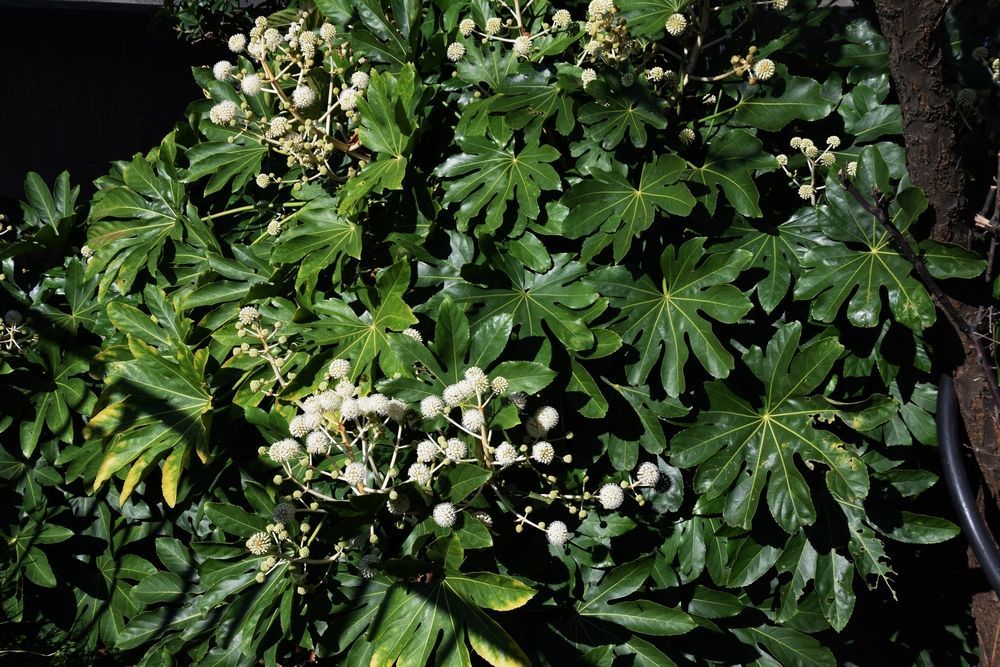
A handsome, tropical-looking, evergreen shrub that's deservedly popular, Fatsia japonica produces huge, glossy, deep green palmate and weatherproof leaves, which are ideal for adding structure and drama to the planting scheme.
Showy panicles of spherical, creamy white flowers known for attracting late-season pollinators appear in autumn, and these are often followed by round, black (inedible) fruit.
A small genus of three species of evergreen shrubs in the family Araliaceae, native to southern Japan and Taiwan, the name ‘fatsia’ means "eight" in old Japanese, and it is named for the typical eight lobes on its large, hand-like leaves.
Fatsia is excellent for adding instant impact to a garden. This architectural shrub is ideal for mixed borders or tropical gardens.
Key Features:
- Flower Colour: During the summer, globular white flowers appear which change to small, black fruits by autumn.
- Size: Typically grows to 250cm in height and width.
- Hardiness: Robust and hardy.
- Sunlight: Full sun or partial shade; can tolerate full shade
- Soil: Grows best in moist but well-drained soil.
- Maintenance: Requires little maintenance, but removing any damaged or untidy growth will encourage fresh leaves and maintain shape.
Uses:
- Fast-growing: will quickly fill a gap in the border. Try it in an exotic-style garden, where the large leaves team well with bamboos and grasses, or as a focal point for a shady corner.
Planting and Care:
- Planting: Plant in moist, well-drained, fertile soil in partial to full shade, ideally a sheltered spot to protect leaves from harsh sun/wind.
- Watering: Let it dry out between waterings but never completely. Ensure excellent drainage to prevent root rot, and droopy leaves often signal under- or over-watering, so check soil moisture before adding more water.
- Fertilising: Benefits from a general-purpose fertiliser applied during its active growing season (spring through summer/autumn). Avoid over-fertilising.
- Pruning: Pruning lightly in mid to late spring, trimming back shoots that disrupt its natural symmetry.