
Plant of the Month: Verbena Bonariensis
Beautiful and delicate, verbena bonariensis adds interest and colour to a garden without creating a solid block of foliage.
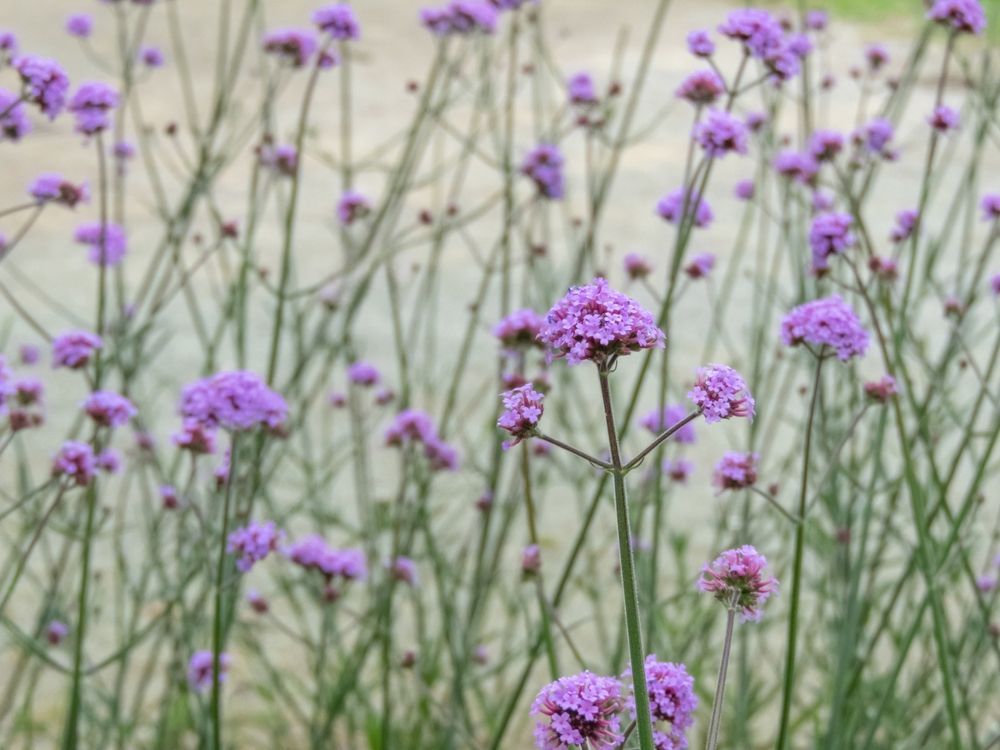
Commonly known as ‘purple top’ or ‘Argentinian vervain,’ Verbena bonariensis is a tall, slender perennial featuring airy, branched square stems and sparse dark green foliage. Throughout mid-summer into late autumn, it produces abundant, tight clusters of vibrant rose-purple flowers that act as a magnet for bees, butterflies, and other pollinators.
Verbena can be grown in any moderately fertile, moist but well-drained soil in full sun. Although it is relatively hardy, it does require protection from harsh winter frosts and excessive winter wetness.
Key Features:
- Flower Colour: Deep purple to violet flower clusters held atop rough, dark green, branched stems.
- Size: Typically grows to 1.5m – 2m tall and 0.5m – 0.6m wide upon reaching maturity.
- Hardiness: Hardy to moderately cold winters, though it may act as a short-lived perennial or self-seed freely in colder areas.
- Sunlight: Full sun.
- Soil: Thrives in moist, well-drained, moderately fertile soil. Protect from excessive winter wet.
- Maintenance: Leave seed heads over winter for birds, then cut back old stems to ground level in early spring.
Uses:
- Borders: Excellent for adding height, architectural structure, and airy transparent depth to the middle or back of garden borders without blocking the view behind.
- Wildlife Gardens: Highly attractive to pollinators, including butterflies, bumblebees, and hoverflies.
- Containers: Can be grown in large containers to bring height and vibrant colour to patios and paved areas.
Planting and Care:
- Planting: Ideally planted in spring. Plant 4 – 6 plants per square metre for a dense, naturalistic effect.
- Watering: Needs regular watering while establishing, but becomes quite drought-tolerant once mature; generally thrives on natural rainfall.
- Fertilising: Doesn’t require added fertiliser; over-fertilising can lead to weak, floppy stems.
- Pruning: Cut back dead stems to the base in late winter or early spring, ready for new shoots in March/April. Leave seed heads in place through autumn to allow self-seeding if desired.
Did You Know…?
Verbena bonariensis (purpletop vervain) has a "see-through" habit with tall, extremely thin and wiry stems. This lets flowers float like purple clouds in a garden and allows you to look straight past it to other flowers - it blocks no views!